Studying Impacts and Solutions to Deceptive Designs in the Age of the Attention Economy
TL;DR
My Master's thesis investigated how dark patterns in digital interfaces exploit cognitive biases and cause measurable neurological harm. Written across M1 (44 pages) and M2 (101 pages) while simultaneously working full-time at the French Ministry of Defense, the thesis integrates neuroscience, behavioral economics, and regulatory analysis — then translates the research into LUX UX, a complete startup concept for a dark pattern detection and remediation platform. Primary research showed 91% of users want to be alerted about dark patterns. The work demonstrates that my commitment to ethical design is grounded in rigorous, multi-disciplinary research — not opinion.
Context
The technology industry faces a growing reckoning with how products affect the people who use them. Dark patterns manipulate users into choices they would not otherwise make. Algorithms optimize for engagement at the cost of well-being. These are not abstract concerns — they are design decisions that someone made, and that someone else could make differently.
During my double Master's in Digital Strategy and Lead UX at ISEA Multimedia Digital Campus, I was inspired by Netflix's "The Social Dilemma" and my earlier BFA research on reading cognition to ask a specific question: How do dark patterns in digital interfaces exploit cognitive biases, and are the effects merely annoying — or genuinely harmful?
I pursued this question while simultaneously working full-time as a UX designer at the French Ministry of Defense — completing my Master's as an alternance (work-study program). The thesis was not a side project; it was a parallel intellectual commitment that informed my professional work and vice versa.
The Investigation
My M1 thesis (44 pages, written in French) built the theoretical foundation by integrating three disciplines that rarely talk to each other in UX practice:
Neuroscience: I studied how dark patterns exploit neuroplasticity — the brain's ability to reorganize itself in response to repeated digital interactions. This is not metaphorical. Research from UCLA, Emory University, and the University of Stavanger demonstrates measurable neurological effects from sustained exposure to manipulative interface patterns. The implications go beyond user frustration into genuine cognitive harm.
Behavioral economics: I applied Daniel Kahneman's dual-process theory (System 1 fast/intuitive thinking vs. System 2 slow/deliberate thinking) and Thaler and Sunstein's nudge theory to explain the mechanism of dark patterns. Dark patterns work because they exploit System 1 processing — they trigger automatic responses before users can engage deliberate evaluation. Understanding this mechanism is essential to designing countermeasures.
Regulatory analysis: I mapped the evolving legal landscape around dark patterns, including GDPR in Europe, CNIL recommendations in France, ADA digital accessibility requirements (which saw a 23% increase in lawsuits in 2020), and the French State Design System (DSFR) accessibility standards. This regulatory mapping would later directly inform my professional work at the Ministry of Defense, where RGAA accessibility compliance was a core requirement.
Download M1 Thesis: Ethical Challenges and Solutions in Digital Interface Design (PDF)
Primary Research
I conducted original research to test market demand for solutions:
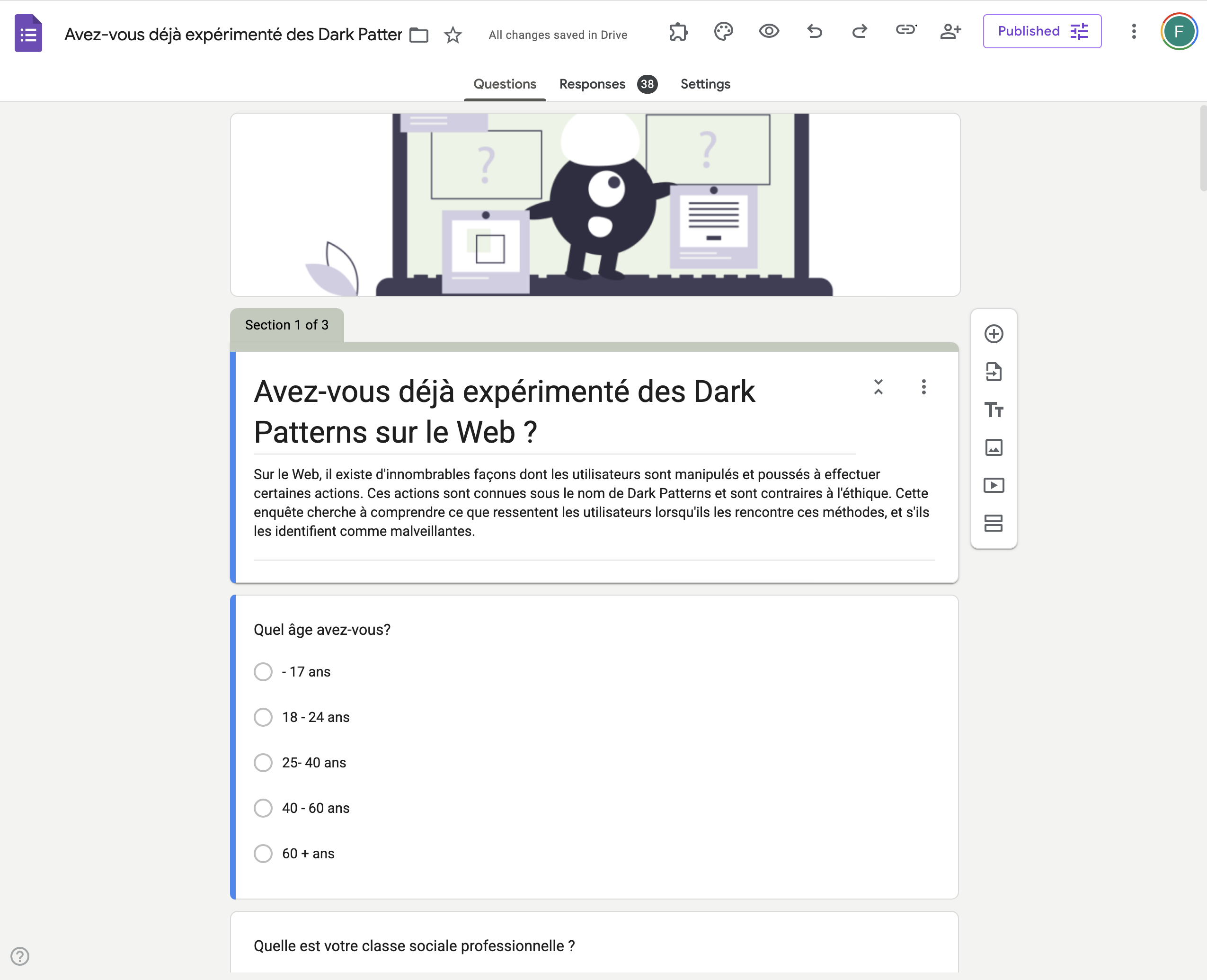
- LinkedIn survey (37 respondents): 91% of respondents said they wanted to be alerted if a site uses dark patterns. 75.3% said they were very likely to stop using a site because it employs dark patterns. Only 9% said they did not want to know or did not care.
- Expert interviews: I interviewed Francis Merson, a psychologist, who described pop-ups and notifications as "quite toxic" and identified streak features on apps like Snapchat as particularly harmful for keeping children "glued to the app." I also interviewed Jennifer Le Cann, a UX specialist in e-commerce, who validated the tool concept as "very interesting" and potentially useful for "consulting or audit firms."
The LUX UX Product Concept
My M2 thesis (101 pages) translated the research into a complete startup plan for LUX UX — a dark pattern detection and remediation tool. This was the academic requirement: develop a viable business concept from the research foundation. The scope of what I produced exceeded typical Master's thesis work:
Dual-market product design:
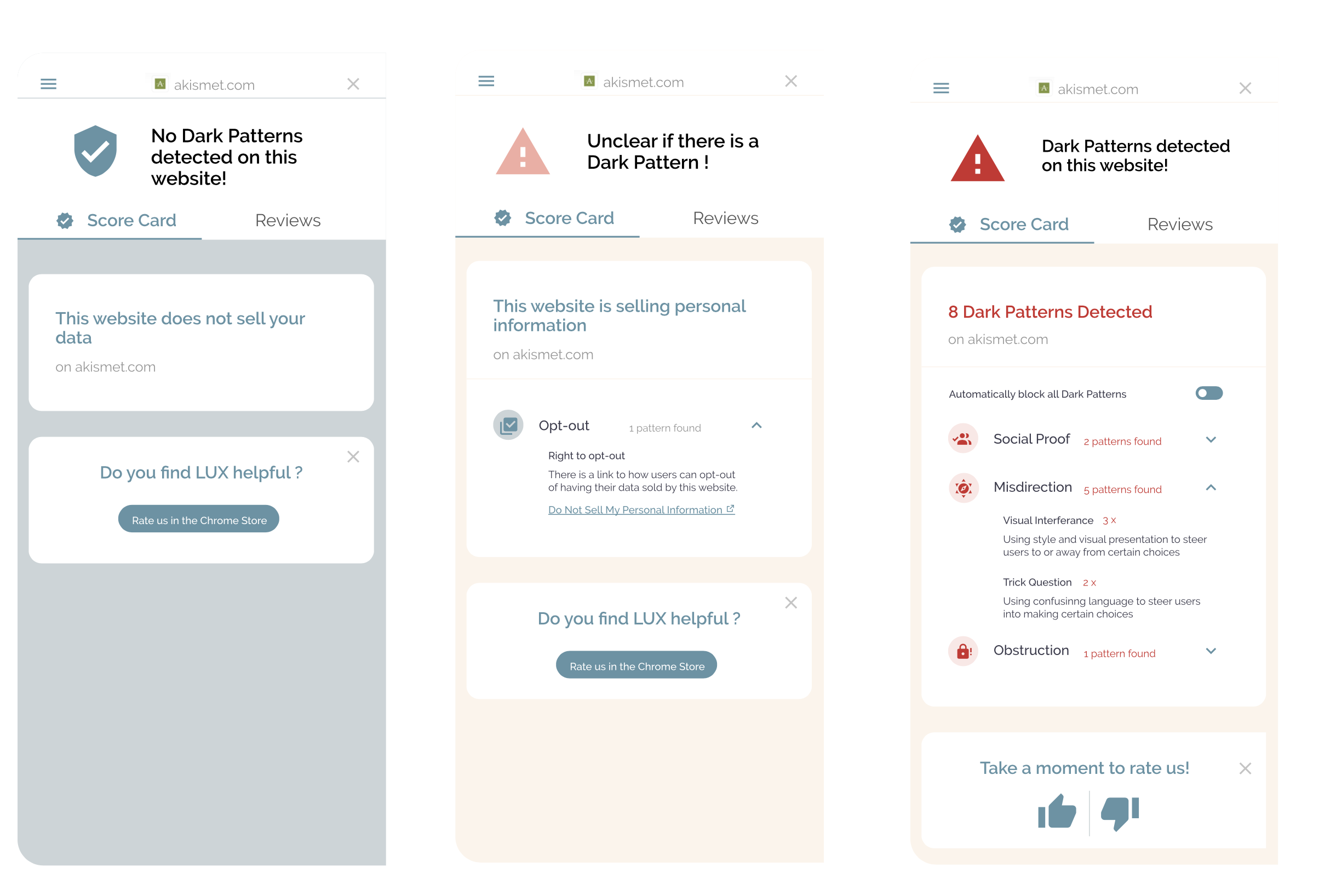
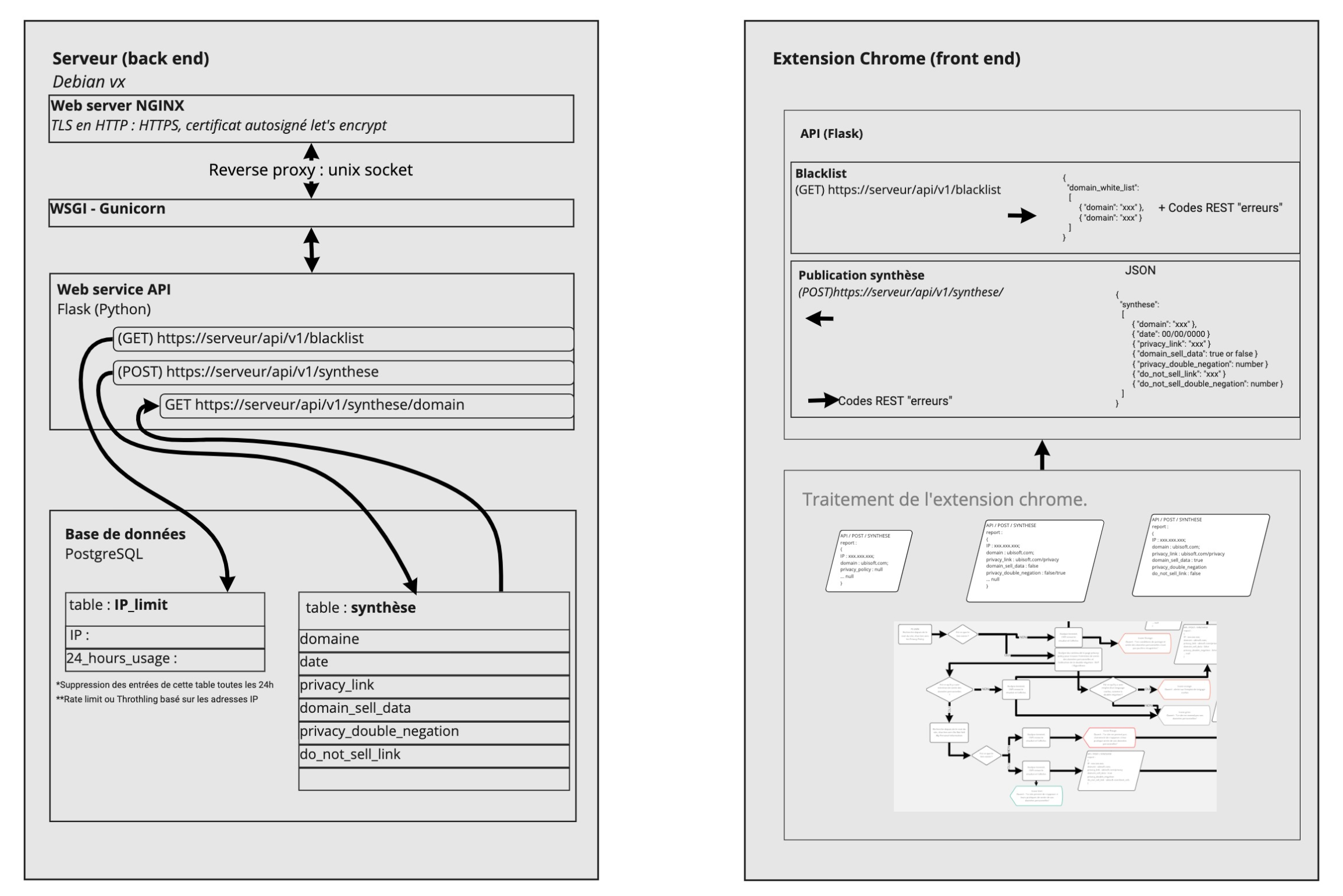
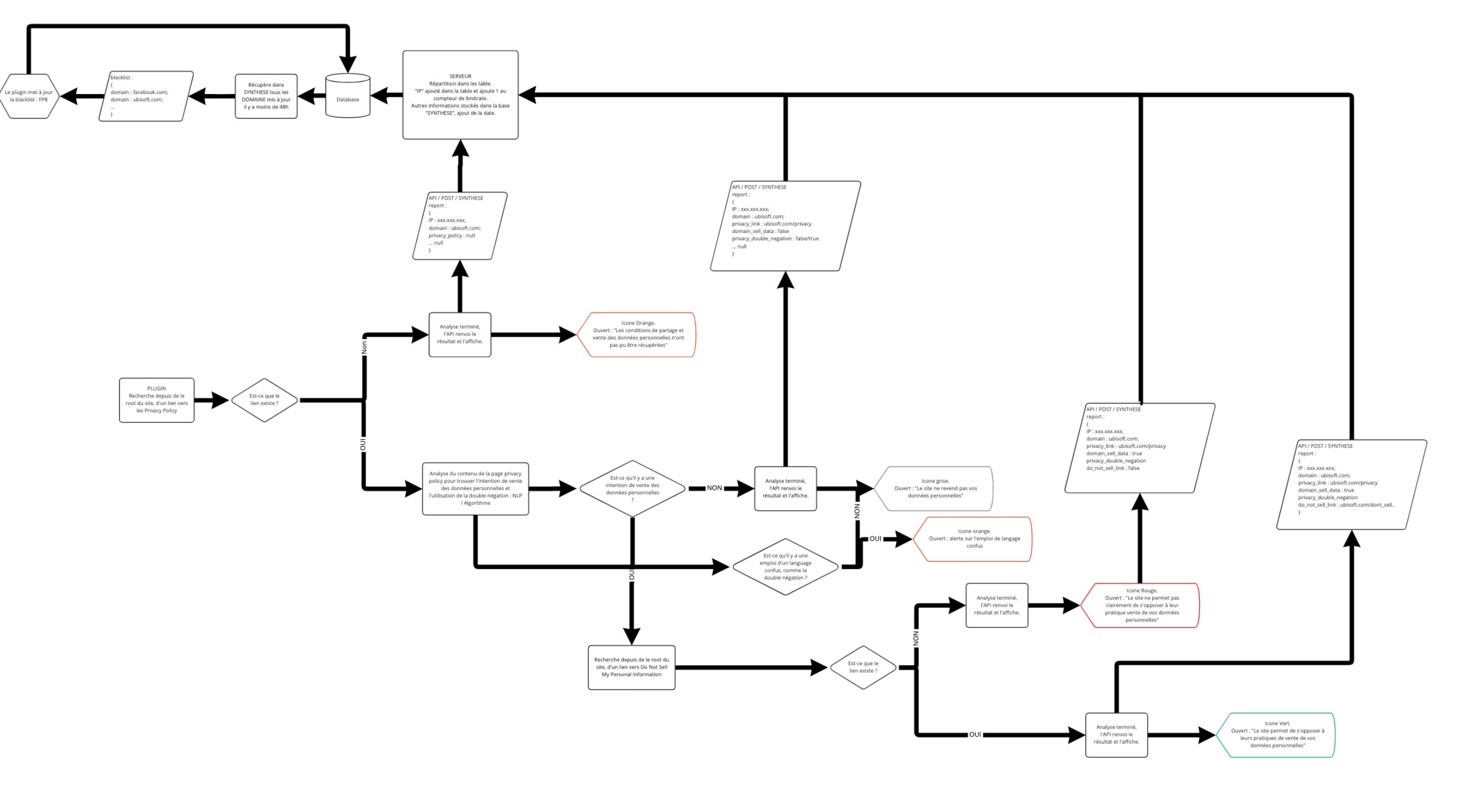
- A B2C Chrome plugin (freemium model) that would detect dark patterns in real time and alert consumers to their presence, explaining the specific manipulation technique being used
- A B2B website analysis platform (license-based) enabling companies to audit their own sites for dark pattern usage and receive remediation guidance
Market analysis: I sized the global UX research software market at $183.8 million in 2019, projected to reach $356 million by 2026 at an 11.9% CAGR. I identified five major indirect competitors (Qualtrics with 27.43% market share, Hotjar, Smartlook, Mouseflow, Matomo) and analyzed their strengths, weaknesses, and market positioning.
Customer segmentation: I developed detailed value proposition canvases for six distinct customer segments spanning both B2B and B2C markets — from UX consulting firms and ethically-motivated businesses to young informed adults and older vulnerable adults. Each segment received its own value proposition analysis using Bain's Elements of Value framework and Maslow's hierarchy.
Financial projections: Year 1 revenue of 150,000 euros, value added of 90,000 euros, net result of 45,140 euros, based on a 50,000-euro seed investment. I developed a three-year product roadmap: 2023 plugin development, 2024 government grants and consulting services, 2024/2025 software launch with first investment round.
Team composition: I assembled a six-person cross-functional team including a co-founder and product owner, front-end developer, back-end/full-stack developer, data scientist, and CFO/strategic director.
What This Demonstrates
The thesis is not valuable because LUX UX became a company. It is valuable because of what it reveals about how I think:
- I map entire systems before proposing solutions. Before designing a dark pattern detection tool, I mapped the neuroscience of how dark patterns work, the behavioral economics of why they are effective, the regulatory landscape that governs them, and the competitive market that would receive a solution. This is the same territory-mapping approach I later applied to 26 government agency websites, 22 data connectors, and multi-country bid management workflows.
- I ground ethical conviction in rigorous analysis. The thesis does not argue that dark patterns are bad because they feel wrong. It demonstrates that they exploit measurable cognitive vulnerabilities and create neurologically quantifiable harm. This rigor — evidence first, then position — is how I approach every design recommendation.
- I think at the product and business level, not just the interface level. A 101-page startup plan with market sizing, competitive benchmarking, financial projections, and a customer segmentation framework is product strategy work. I was doing this as a Master's student while simultaneously working as a UX designer at the Ministry of Defense.
Results & Impact
91%
Want dark pattern alerts (survey)
75.3%
Would stop using sites with dark patterns
145 pages
Combined thesis work (M1 + M2)
$356M
Projected market (UX research software)
6
Customer segments analyzed
5
Competitors benchmarked
Research Outputs
- M1 thesis: 44 pages integrating neuroscience, behavioral economics, and regulatory analysis
- M2 startup plan: 101 pages with complete market analysis, financial projections, and product roadmap
- Survey finding: 91% of respondents want to be alerted about dark patterns
- Survey finding: 75.3% would stop using sites that employ dark patterns
- Market analysis: $183.8M to $356M UX research software market identified
- Competitive benchmarking: 5 major competitors analyzed with market share and revenue data
- Customer segmentation: 6 distinct segments with individual value proposition canvases
Career-Level Impact
- The regulatory expertise developed in the thesis (GDPR, CNIL, ADA) directly informed RGAA accessibility work at the Ministry of Defense
- The accessibility analysis skills honed through academic research led to 601 WCAG findings identified on J+Track at Jellyfish
- The evidence-first approach shapes every design recommendation — when I advocate against a particular interaction pattern, I can explain the cognitive mechanism it exploits, not just the moral intuition behind the concern
Reflections
Rigor earns credibility. This thesis does not argue that dark patterns are bad because they feel wrong. It demonstrates the neuroscience of why they cause measurable cognitive harm. This evidence-first approach is what allows me to advocate for ethical design in commercial environments without being dismissed as idealistic.
The research keeps compounding. The questions I explored in this thesis — how digital interfaces shape cognition, how design choices can exploit or protect vulnerable users, how regulatory frameworks should evolve — become exponentially more relevant as large language models become embedded in more products. The methodological foundation I built here positions me to contribute meaningfully to responsible AI design.
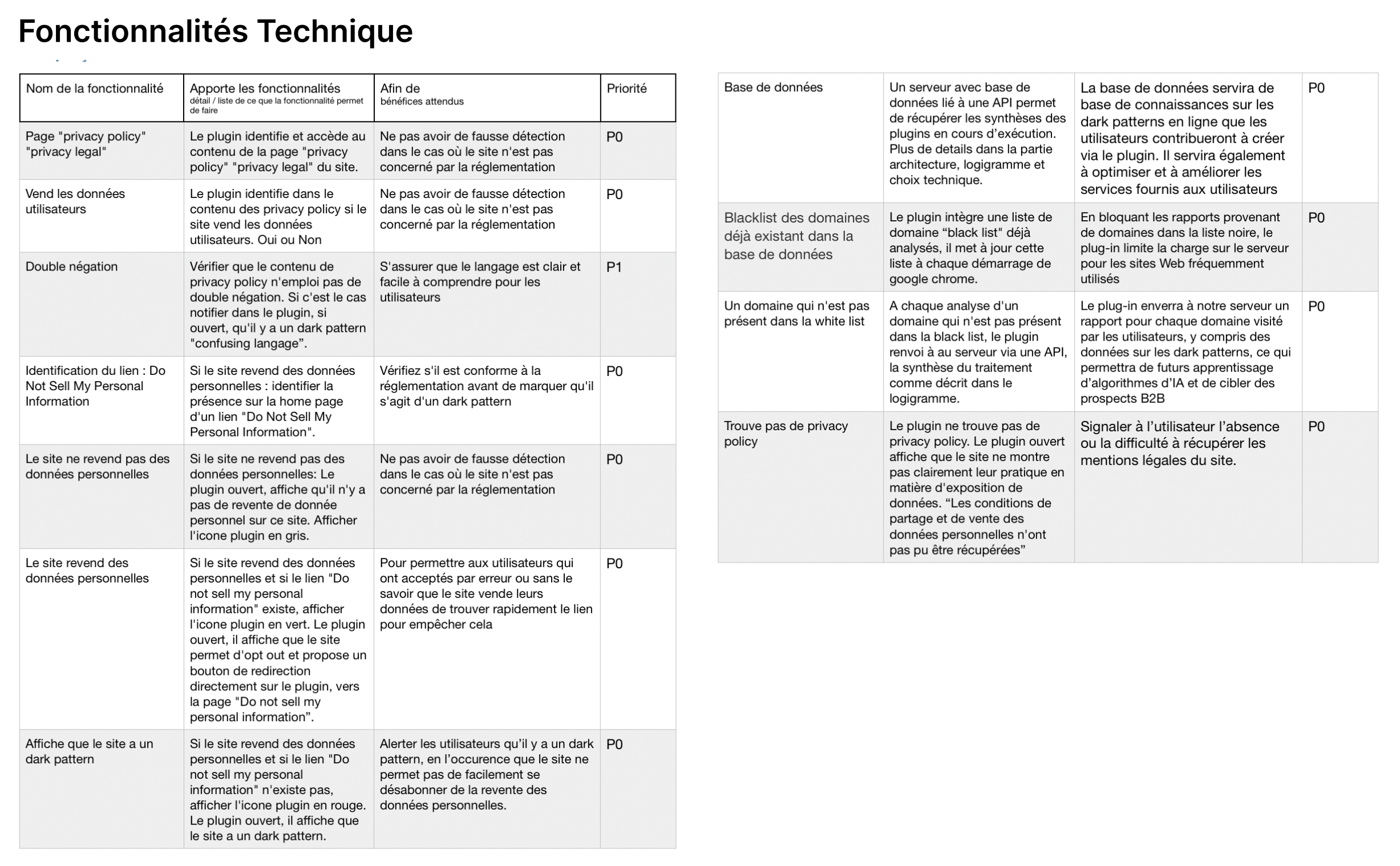
Key Artifacts
Related Case Studies
See all projectsParis College of Art
How screen reading changes the brain
Built a working hybrid book prototype that connects physical pages to digital content through conductive ink circuits and a Raspberry Pi — grounded in neuroscience research on how screen reading changes the brain. A BFA thesis that became the intellectual foundation for everything that followed.
Academic ResearchFrench Ministry of Defense
Redesigning the French Ministry of Defense web portal across 26 agencies
26 agencies, each with its own communication team and editorial process. 9 co-design workshops, 100+ participants from military and civilian organizations, 50+ site benchmarks, and reusable research infrastructure built to scale across the ministry.
Government UX