The Responsible Tech Thread
TL;DR
Responsible technology is not a side interest in my work -- it is woven into my practice. This case study traces a consistent intellectual thread across three milestones: a Master's thesis investigating how dark patterns exploit cognitive biases (with primary research showing 91% of users want dark pattern alerts), a carbon emission calculator I designed for digital advertising at Jellyfish (in partnership with Scope3, covering DV360, Meta, and YouTube), and a professional certification from the Center for Humane Technology. Together, these demonstrate that my commitment to ethical design is grounded in rigorous research, pursued through professional development, and applied in commercial product work -- not performative, but integrated.
Context
The technology industry faces a growing reckoning with how products affect the people who use them. Dark patterns manipulate users into choices they would not otherwise make. Digital advertising generates carbon emissions most advertisers never measure. Algorithms optimize for engagement at the cost of well-being. These are not abstract concerns -- they are design decisions that someone made, and that someone else could make differently.
I have been thinking about this since before I entered the industry professionally. My BFA thesis at Paris College of Art explored how the shift from print to digital reading affects neural development, empathy, and deep thinking skills -- a question about technology's cognitive impact that became the foundation for everything that followed. When I began my Master's program at ISEA Multimedia Digital Campus, I carried that question forward into a direct investigation of how digital interfaces exploit the cognitive vulnerabilities I had been studying.
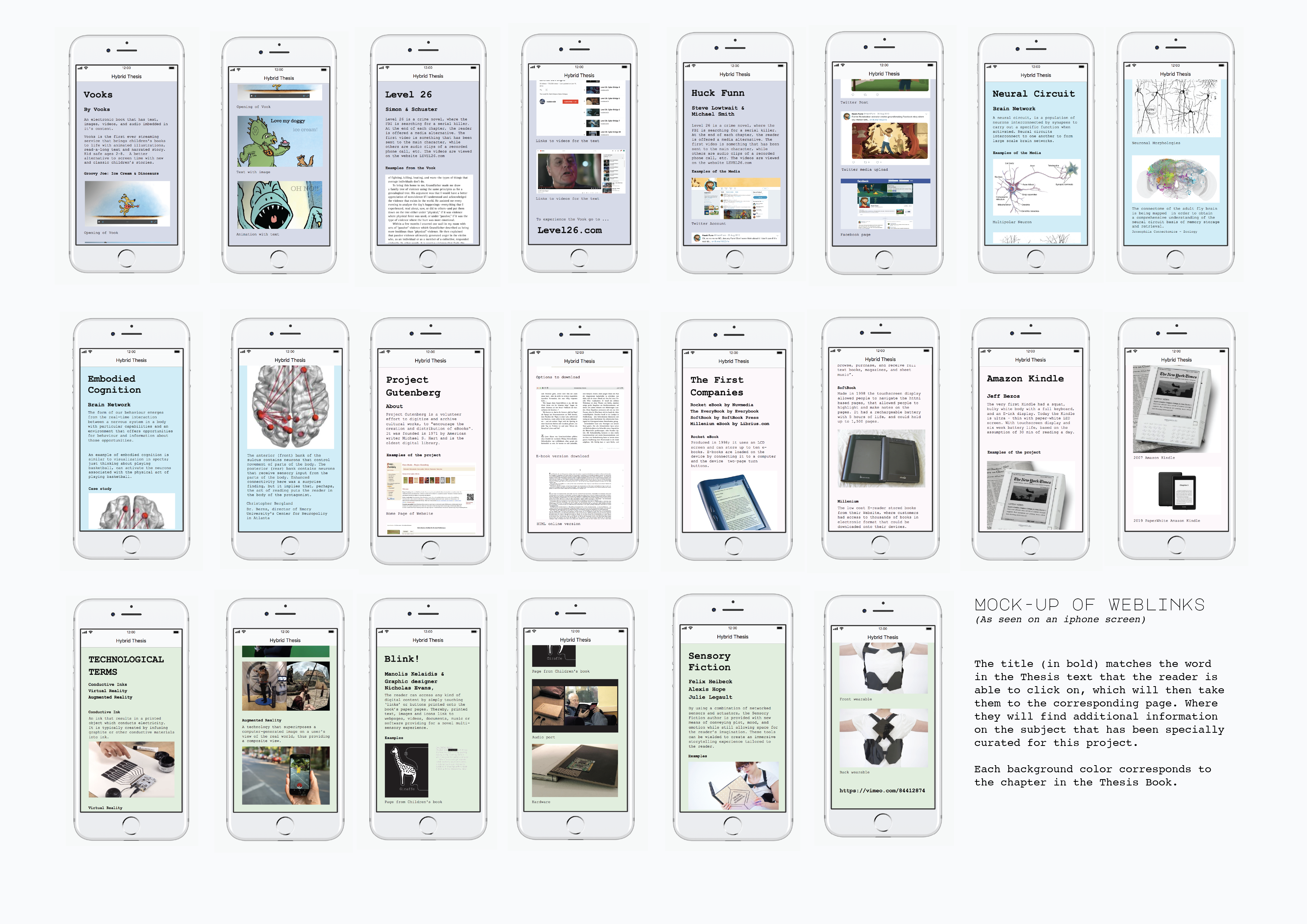
Download BFA Thesis: Hybrid Books (PDF)
This is not a single project case study. It is a thematic narrative that threads three distinct components of my career into a coherent position: I design for humans, and I take seriously what that means.
Component 1: The Dark Patterns Thesis (2020-2022)
The Research Question
During my double Master's in Digital Strategy and Lead UX, I was inspired by Netflix's "The Social Dilemma" and my earlier research on reading cognition to ask a specific question: How do dark patterns in digital interfaces exploit cognitive biases, and are the effects merely annoying -- or genuinely harmful?
The Investigation
My M1 thesis (44 pages, written in French) built the theoretical foundation by integrating three disciplines that rarely talk to each other in UX practice:
Neuroscience: I studied how dark patterns exploit neuroplasticity -- the brain's ability to reorganize itself in response to repeated digital interactions. This is not metaphorical. Research from UCLA, Emory University, and the University of Stavanger demonstrates measurable neurological effects from sustained exposure to manipulative interface patterns. The implications go beyond user frustration into genuine cognitive harm.
Behavioral economics: I applied Daniel Kahneman's dual-process theory (System 1 fast/intuitive thinking vs. System 2 slow/deliberate thinking) and Thaler and Sunstein's nudge theory to explain the mechanism of dark patterns. Dark patterns work because they exploit System 1 processing -- they trigger automatic responses before users can engage deliberate evaluation. Understanding this mechanism is essential to designing countermeasures.
Regulatory analysis: I mapped the evolving legal landscape around dark patterns, including GDPR in Europe, CNIL recommendations in France, ADA digital accessibility requirements (which saw a 23% increase in lawsuits in 2020), and the French State Design System (DSFR) accessibility standards. This regulatory mapping would later directly inform my professional work at the Ministry of Defense, where RGAA accessibility compliance was a core requirement.
Download M1 Thesis: Ethical Challenges and Solutions in Digital Interface Design (PDF)
Primary Research
I conducted original research to test market demand for solutions:
- LinkedIn survey (37 respondents): 91% of respondents said they wanted to be alerted if a site uses dark patterns. 75.3% said they were very likely to stop using a site because it employs dark patterns. Only 9% said they did not want to know or did not care.
- Expert interviews: I interviewed Francis Merson, a psychologist, who described pop-ups and notifications as "quite toxic" and identified streak features on apps like Snapchat as particularly harmful for keeping children "glued to the app." I also interviewed Jennifer Le Cann, a UX specialist in e-commerce, who validated the tool concept as "very interesting" and potentially useful for "consulting or audit firms."
The LUX UX Product Concept
My M2 thesis (101 pages) translated the research into a complete startup plan for LUX UX -- a dark pattern detection and remediation tool. This was the academic requirement: develop a viable business concept from the research foundation. The scope of what I produced exceeded typical Master's thesis work:
Dual-market product design:
- A B2C Chrome plugin (freemium model) that would detect dark patterns in real time and alert consumers to their presence, explaining the specific manipulation technique being used
- A B2B website analysis platform (license-based) enabling companies to audit their own sites for dark pattern usage and receive remediation guidance
Market analysis: I sized the global UX research software market at $183.8 million in 2019, projected to reach $356 million by 2026 at an 11.9% CAGR. I identified five major indirect competitors (Qualtrics with 27.43% market share, Hotjar, Smartlook, Mouseflow, Matomo) and analyzed their strengths, weaknesses, and market positioning.
Customer segmentation: I developed detailed value proposition canvases for six distinct customer segments spanning both B2B and B2C markets -- from UX consulting firms and ethically-motivated businesses to young informed adults and older vulnerable adults. Each segment received its own value proposition analysis using Bain's Elements of Value framework and Maslow's hierarchy.
Financial projections: Year 1 revenue of 150,000 euros, value added of 90,000 euros, net result of 45,140 euros, based on a 50,000-euro seed investment. I developed a three-year product roadmap: 2023 plugin development, 2024 government grants and consulting services, 2024/2025 software launch with first investment round.
Team composition: I assembled a six-person cross-functional team including a co-founder and product owner, front-end developer, back-end/full-stack developer, data scientist, and CFO/strategic director.
What This Demonstrates
The thesis is not valuable because LUX UX became a company. It is valuable because of what it reveals about how I think:
- I map entire systems before proposing solutions. Before designing a dark pattern detection tool, I mapped the neuroscience of how dark patterns work, the behavioral economics of why they are effective, the regulatory landscape that governs them, and the competitive market that would receive a solution. This is the same territory-mapping approach I later applied to 26 government agency websites, 22 data connectors, and multi-country bid management workflows.
- I ground ethical conviction in rigorous analysis. The thesis does not argue that dark patterns are bad because they feel wrong. It demonstrates that they exploit measurable cognitive vulnerabilities and create neurologically quantifiable harm. This rigor -- evidence first, then position -- is how I approach every design recommendation.
- I think at the product and business level, not just the interface level. A 101-page startup plan with market sizing, competitive benchmarking, financial projections, and a customer segmentation framework is product strategy work. I was doing this as a Master's student while simultaneously working as a UX designer at the Ministry of Defense.
Component 2: J+Carbon -- Sustainability in Commercial Product Design (2023-2024)
The Product
At Jellyfish, I designed J+Carbon -- a carbon emission calculator for digital advertising, developed in partnership with Scope3, a recognized leader in advertising carbon measurement. The product enables advertisers to measure and begin reducing their campaigns' carbon footprint -- a capability that barely existed in the advertising industry.
The Design Challenge
J+Carbon sat at the intersection of two domains that rarely overlap: advertising technology and environmental sustainability. Advertisers are accustomed to optimizing for ROAS, CTR, and conversion rates -- not carbon emissions. The design needed to make environmental impact data as intuitive and actionable as the performance metrics advertisers already use daily.
What I Designed
Platform integration for eco-reporting: The primary flow enabled advertisers to generate eco-reports directly from their advertising platform data across DV360, Meta, and YouTube -- three of the largest digital advertising platforms. I designed a secondary path for CSV upload and analysis, extending coverage to Meta, SA360, Pinterest, Snapchat, TikTok, and Microsoft.
Educational resources: Because carbon emissions from digital advertising was a novel concept for most users, I designed a Resource Library as an integral product component -- not a help center tucked away, but a first-class feature that helps users "understand the carbon emissions from digital advertising campaigns and learn how to make your strategies more eco-friendly through comprehensive guides on emission types and sustainable practices."
Community integration: I designed a connection to Jellyfish's Sustainability in Action Slack community, embedding the tool within a broader organizational commitment to sustainable advertising practices.
Commercial-environmental balance: The UI framing I developed -- "Empower Your Advertising with Sustainability... blending high ROI with low environmental impact" -- deliberately positions environmental responsibility as compatible with commercial performance, not opposed to it. This framing choice reflects a deliberate strategic decision: sustainability adoption in advertising requires demonstrating that responsible practices enhance rather than compromise business outcomes.
What This Demonstrates
- The educational instinct persists. Just as LUX UX was built on the principle that education creates demand for ethical tools, J+Carbon's Resource Library embeds education directly in the product experience. I design products that help users understand, not just act.
- Responsible technology scales through commercial integration. The thesis proposed a standalone ethical design tool. J+Carbon took the same values and embedded them in an existing product ecosystem -- a more pragmatic and scalable approach. I learned that responsible technology has the greatest impact when it meets practitioners where they already work.
- I bridge domains that do not naturally overlap. Connecting advertising performance optimization with environmental impact measurement required translating between two professional vocabularies and two sets of priorities. This is the same silo-bridging pattern I apply when connecting Solution Consultants to design decisions or military agencies to co-design workshops.
Component 3: Center for Humane Technology Certification (2023)
The Certification
In 2023, I completed the Foundations of Humane Technology certification from the Center for Humane Technology -- the organization founded by former tech industry insiders including Tristan Harris, whose work I had cited in my Master's thesis two years earlier.
Why This Matters
The certification was not a casual continuing education choice. It was a deliberate professional development decision that continued the research trajectory I had started in my thesis:
- Thesis (2020-2022): Investigated the problem -- how dark patterns exploit cognitive biases
- Certification (2023): Deepened the methodology -- professional frameworks for designing humane technology
- J+Carbon (2023-2024): Applied the principles -- sustainable advertising in a commercial product
This three-point arc -- academic research, professional certification, commercial application -- is uncommon among product designers at any level. Most designers who care about ethical technology express it through blog posts or conference talks. I expressed it through a neuroscience-grounded thesis, a professional certification, and a shipped product.
The Thread: What Connects These Three Components
Consistent Methodology
Across all three components, the approach is the same: map the territory first, ground every claim in evidence, and design solutions that empower rather than exploit.
In the thesis, I mapped the neuroscience of dark patterns before proposing a detection tool. In J+Carbon, I designed educational resources before asking users to generate eco-reports. In pursuing the Humane Technology certification, I invested in systematic methodology before claiming expertise. The pattern is territory mapping applied to ethics -- understanding the full system before intervening in it.
Evolving Application
| Stage | Context | Approach | Scale |
|---|---|---|---|
| Thesis (2020-2022) | Academic | Rigorous multi-disciplinary research; startup business plan | Individual project |
| Certification (2023) | Professional development | Formalized methodology; peer community | Personal capability |
| J+Carbon (2023-2024) | Commercial product | Embedded sustainability in a revenue-generating product for 500+ clients | Organizational impact |
Each stage built on the previous one. The thesis provided the intellectual foundation. The certification provided the professional framework. J+Carbon provided the proof that responsible technology principles can operate inside commercial constraints.
Integration, Not Separation
The most important thing about this thread is that it is not separate from my other work. The accessibility expertise I developed through thesis regulatory analysis (GDPR, CNIL, ADA) directly informed my WCAG assessments at Jellyfish -- 601 findings on J+Track alone, with 69 contrast errors identified. The user advocacy principles from the Humane Technology certification shape how I write interview protocols and present research findings. The educational design philosophy from the LUX UX concept shows up in every research guide and methodology document I create.
Responsible technology is not a portfolio category for me. It is a lens through which I practice all design.
Results & Impact
91%
Want dark pattern alerts (survey)
75.3%
Would stop using sites with dark patterns
145 pages
Combined thesis work (M1 + M2)
3
Platforms supported (J+Carbon)
6
Additional platforms in pipeline
$356M
Projected market (UX research software)
Thesis Impact
- M1 thesis: 44 pages integrating neuroscience, behavioral economics, and regulatory analysis
- M2 startup plan: 101 pages with complete market analysis, financial projections, and product roadmap
- Survey finding: 91% of respondents want to be alerted about dark patterns
- Survey finding: 75.3% would stop using sites that employ dark patterns
- Market analysis: $183.8M to $356M UX research software market identified
- Competitive benchmarking: 5 major competitors analyzed with market share and revenue data
- Customer segmentation: 6 distinct segments with individual value proposition canvases
J+Carbon Impact
- Platforms supported at launch: 3 (DV360, Meta, YouTube)
- Platforms in pipeline: 6 additional (SA360, Pinterest, Snapchat, TikTok, Microsoft, Meta CSV)
- Partnership: Scope3 -- recognized leader in advertising carbon measurement
- Product positioning: First carbon emission calculator for digital advertising at Jellyfish
- Educational integration: Resource Library and community channel designed as core product features
Career-Level Impact
- My RGAA accessibility work at the Ministry of Defense drew on the regulatory expertise developed in the thesis
- The 601 WCAG findings I identified on J+Track at Jellyfish reflect accessibility analysis skills honed through academic research
- J+Carbon connected Jellyfish to a growing market for sustainable advertising tools
- The three-point narrative (thesis + certification + product) creates a positioning advantage for responsible AI and ethical technology roles that few designers at any level can match
Reflections
What I Have Learned About Responsible Technology in Practice
It cannot live in a silo. When ethical design principles exist only as guidelines documents or certification badges, they have no impact on what ships. J+Carbon works because sustainability measurement is embedded in the tool advertisers already use -- not because someone wrote a policy about it.
Education is the multiplier. The most impactful design choice in J+Carbon was not any single screen -- it was the decision to make the Resource Library a first-class product feature. Users who understand why carbon emissions from digital advertising matter will make better decisions than users who are simply shown a number. This is the same principle that drives every research guide and methodology document I create: build understanding, not just compliance.
Rigor earns credibility. My thesis does not argue that dark patterns are bad because they feel wrong. It demonstrates the neuroscience of why they cause measurable cognitive harm. This evidence-first approach is what allows me to advocate for ethical design in commercial environments without being dismissed as idealistic. When I recommend against a particular interaction pattern, I can explain the cognitive mechanism it exploits -- not just the moral intuition behind the concern.
The work is never finished. The Center for Humane Technology certification was not an endpoint -- it was a checkpoint in ongoing learning. The responsible technology landscape evolves constantly as AI reshapes what is possible and what is at risk. I stay current not because it looks good on a resume, but because the stakes are real and the design decisions we make today compound.
What I Would Explore Next
The intersection of responsible technology and AI design is where I see the most urgent need and the most interesting problems. As large language models become embedded in more products, the questions I explored in my thesis -- how digital interfaces shape cognition, how design choices can exploit or protect vulnerable users, how regulatory frameworks should evolve -- become exponentially more relevant. The methodological foundation I have built -- neuroscience-grounded research, systematic evaluation frameworks, commercial application experience -- positions me to contribute meaningfully to this work.
Core Patterns Demonstrated
- Territory Mapping: The thesis mapped the complete dark pattern ecosystem -- neuroscience, behavioral economics, regulatory landscape, competitive market -- before proposing any solution. J+Carbon required mapping the intersection of advertising technology and sustainability.
- Scaling Through Teaching: The LUX UX product philosophy was built on education-as-empowerment. J+Carbon's Resource Library embeds education in the product. Every research guide I create follows this same principle.
- Infrastructure Building: The thesis produced reusable analytical frameworks (dark pattern taxonomy, cognitive bias mapping, regulatory compliance checklist). The Humane Technology certification added professional methodology to my practice toolkit.
- Operating Above Title: As a Master's student, I produced a 101-page investor-ready startup plan while simultaneously working as a UX designer at the Ministry of Defense. As a UX Designer at Jellyfish, I designed a sustainability product that positioned the company in a new market category.
Key Artifacts
M1 Thesis
M2 Startup Plan -- LUX UX
Survey Data Visualizations
J+Carbon Landing Page
J+Carbon Resource Library
J+Carbon Design Iterations
Center for Humane Technology Certification
Competitive Market Analysis
Related Case Studies
See all projectsJellyfish / BrandTech Group
Designing the First AI Brand Perception Tool
Created a product with no UX precedent -- 300 leads and 12 demos within 48 hours of launch, designed through structured testing with C-suite stakeholders across 4 countries.
300 leads in 48h
French Ministry of Defense
Research Orchestration Across 26 Agencies
Orchestrated enterprise-scale UX research across the French defense establishment -- 9 workshops, 100+ participants, 50+ reference site benchmarks -- while holding an apprentice title.
26 agencies
Let's Connect
I am looking for a player-coach role -- Staff, Lead, or Senior Product Designer -- where I can combine hands-on design with team leadership and research practice development.